
A £1 a night York and North Yorkshire visitor levy could raise about £26m a year, a report for the mayor says. No scheme is designed yet; 2027-28 is the earliest.
Visitors staying overnight in York could pay £1 a night on top of their room under a tourist tax proposed for York and North Yorkshire. A report for Mayor David Skaith says that rate would raise about £26 million a year across the region.
Nothing has been decided. The report says no levy can start before 2027-28, and no scheme has yet been designed or put out to consultation. But it makes what it calls a “positive case for proceeding”, and the mayor has said he will develop plans over the coming months (York and North Yorkshire Combined Authority, 7 September 2026).
The report was written by the York and North Yorkshire Policy Lab, a partnership between the Combined Authority and York St John University (Visitor Levy Report, PDF).
What the report recommends
- A flat rate of £1 per night to start with, with a built-in review.
- One scheme for the whole Combined Authority area, not separate York and North Yorkshire schemes.
- Ring-fencing the money for tourism and visible local benefits.
- Detailed design work in 2026, with the hospitality trade, environmental groups and residents involved from the start.
- A stakeholder advisory group to advise on the design and on how the money is spent.
- An independent evaluation after the first and third years.
The Combined Authority’s release adds that possible exemptions for low-cost stays could ease the burden on small operators and campsites. The report lists other exemptions any scheme would have to decide on: children, residents, particular kinds of accommodation, and a cap on the number of nights charged.
How much it could raise
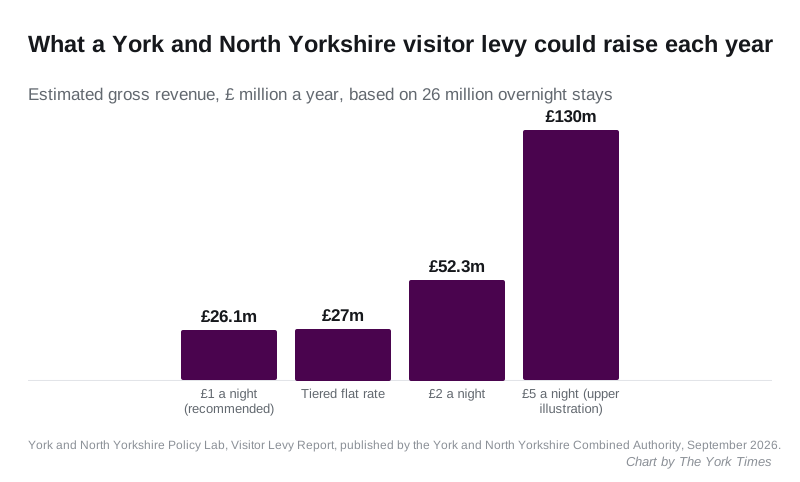
The report bases its figures on 26 million overnight stays a year in York and North Yorkshire. It sets out three ways of charging:
| Model | How it works | Estimated yearly revenue |
|---|---|---|
| Flat rate | £1 or £2 per night | about £26.1m or £52.3m |
| Tiered flat rate | Different fixed rates by type of accommodation (the Welsh model) | about £27m |
| Percentage | A share of the room price, such as 5% | £50m to £130m or more, highly variable |
The report’s upper illustration, £5 a night across 26 million nights, comes to about £130m.
Running a scheme costs money too. The report assumes administration would take 4% to 6% of revenue in the early years, falling to 2% to 3%. At £1 a night that leaves £23m to £25m a year once a scheme is established.
Why York is in the frame
The report’s York figures come from the STEAM tourism model for 2024:
- York had 9.4 million visits, of which 7.7 million were day trips.
- Overnight visitors to York stayed an average of 3.3 nights.
- Across York and North Yorkshire there were 41.7 million visits and 7.8 million overnight visitors, in a visitor economy worth about £6.2 billion.
Day visitors make up most of York’s traffic, and a levy on accommodation would not touch them. The report says research on prices suggests a modest levy has limited effect on demand, “particularly in established, high-appeal destinations such as York”. It warns that more care is needed in price-sensitive rural and domestic markets.
It points to schemes already running. Manchester has charged £1 a night since 2023 through a business improvement district for accommodation. Edinburgh has a scheme on the way, and Paris and Barcelona have long charged one.
What happens next
The report says the legal power for English mayors to bring in a visitor levy comes through national legislation, and puts the earliest start at 2027-28. The mayor said in September that he would keep meeting tourism and hospitality groups and develop plans with York St John University and the Policy Lab. The Combined Authority has published no consultation or decision date yet.
“Good policy starts with good evidence,” said Professor Brendan Paddison of York St John University, the Policy Lab’s academic lead. He said the findings suggest a levy is “a viable option worth exploring further, but the detail matters”.
What it means for you
- If you live in York, nothing changes now. The report covers overnight stays in paid accommodation; nothing in it suggests residents or day visitors would pay.
- If you run a hotel, B&B or holiday let, you would collect the levy from guests if a scheme goes ahead. The report recommends a simple digital collection platform. The stakeholder advisory group is the place to have a say on exemptions and on how the money is spent.
- If you are booking a stay for 2027 or later, a £1 a night charge is possible but not decided.
Have your say