
York begins its 2045 Local Plan with an August consultation, months after adopting 822 homes a year. Plus York Central, Coney Street and the Dakota hotel.
York spent decades as the largest city in England without an adopted Local Plan. That ended on 27 February 2025, when Full Council adopted the City of York Local Plan after the Planning Inspectors confirmed it sound (City of York Council). Seventeen months later the ink is barely dry and the council has already started on the next one: on 31 July 2026 it gave formal notice that work has begun on a new plan, “York Local Plan 2045”, with a first public consultation starting in August (notice to commence plan-making).
This page is the running picture of planning in York: the rules now in force, the plan being written next, and the big schemes actually moving in 2026.
The plan in force: 822 homes a year to 2033
The adopted Local Plan covers 2017 to 2032/33 and requires York to deliver a minimum of 822 net new homes a year, at least 13,152 over the plan period. The plan identifies supply for more than that, around 17,401 homes across strategic sites, smaller allocations and windfalls, and it allocates enough land to cover a further five years to 2038 so that the new York Green Belt boundary can be treated as permanent (adopted Local Plan). The council amended the published version in April and June 2026 to correct factual errors, without changing policy (Adopted Local Plan page).
Is the city keeping up? The council’s own monitoring, published June 2025, says yes, narrowly. York can show a 5.74-year housing land supply, against the five years Government demands. But the cushion is thinner than it looks: York scored 79% on the Housing Delivery Test in December 2024, which triggers a 20% buffer on its five-year requirement, and a shortfall of 523 homes accumulated between 2017 and 2025 has to be made up over the rest of the plan period (Housing Monitoring Update, June 2025).
What it means for you: while the council can demonstrate a five-year supply, it keeps full control: applications are judged against the Local Plan. If delivery slips and the supply falls below five years, national policy tilts decisions towards approval, which is how speculative schemes get in. The monitoring updates, published twice a year, are the number to watch (development plan monitoring).
The next plan: York Local Plan 2045
The new plan, formally commenced on 31 July 2026 under the Government’s new plan-making system, will eventually replace the 2025 plan and, for the first time, fold minerals and waste policies into the city’s own plan. The council says a scoping consultation starts in August 2026 (scoping consultation). This early stage is about what the plan should cover, not yet about sites; the arguments over where homes go will come in later rounds. To be notified of consultations, ask to join the council’s database via localplan@york.gov.uk with “Consultation Database” in the subject line (strategic planning policy).
York Central: the £2.5 billion site behind the station
York Central is the scheme that dwarfs everything else: 45 hectares of former railway land behind the station, allocated in the Local Plan for 1,700 to 2,500 homes and around 100,000 square metres of offices (Policy SS4), with outline permission granted back in 2019 (adopted Local Plan, York Central planning).
Where it stands: the £155 million infrastructure phase is built far enough that the new spine road opened on 8 July 2025, replacing a stretch of Leeman Road between Salisbury Road and Marble Arch, with a second phase to bridge the East Coast Main Line towards Water End still to come (York Central). A McLaren and Arlington joint venture leads the development alongside Homes England, Network Rail and the National Railway Museum; Allies and Morrison were appointed lead masterplanner in May 2025, and a 195,000 sq ft Government hub for up to 2,600 civil servants is planned on the site (design team announcement). The Leeman Road corridor keeps its rolling road closures until January 2027 while the work goes on, covered on our roadworks and travel page.
Coney Street Riverside: approved, paperwork moving
The other city-centre scheme to watch is the redevelopment of 19 to 33 Coney Street and the land down to the river: converted and new buildings of three to six storeys with shops and commercial space, purpose-built student accommodation and, the public gain, a new riverside walkway along the Ouse. The application (22/02525/FULM) went to committee in October 2024 and the decision notice finally issued on 30 January 2026 (Public Access portal). It is not yet a building site, but the pre-start paperwork has begun: a condition covering historic building recording went in for discharge in July 2026. When hoardings go up on Coney Street, this is why.
Also moving in 2026
- Dakota Hotel, Rougier Street. The consented hotel scheme (24/02021/FULM) filed a steady run of condition-discharge applications through spring 2026, including its construction traffic management plan in May, the document a developer files when it is gearing up to build (Public Access portal).
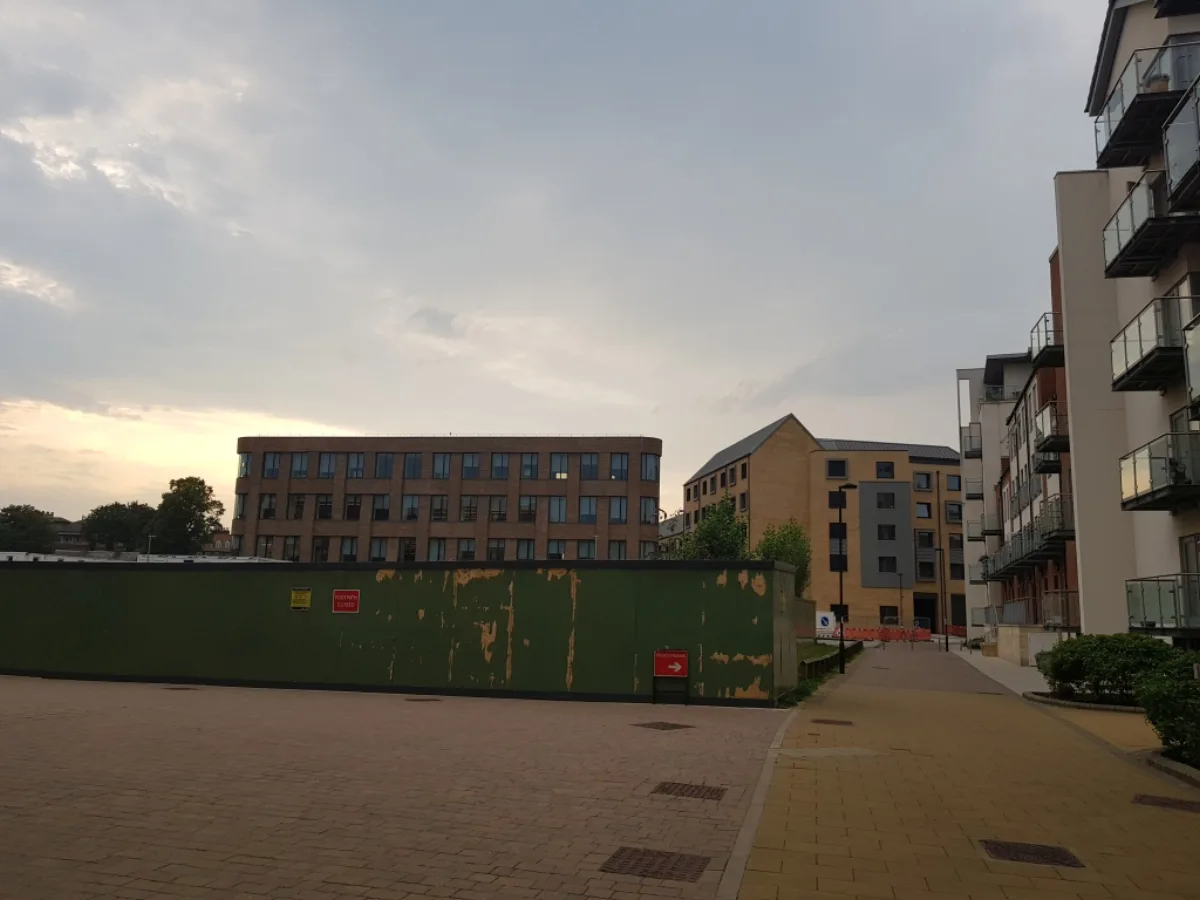
- Hungate. The long-running Lendlease scheme off The Stonebow, the city centre’s biggest recent housing site (our photo above), is quiet on the planning register: the newest entry is a 2024 amendment to Block G, with Block D’s start on site certified back in 2022.
- Duncombe Square. The council’s first Passivhaus housing scheme won three York Design Awards in July 2026, a rare good-news planning story (council news).
How to see and comment on applications near you
Every live application in the city is on the council’s Public Access portal: search by address, keyword or reference at planningaccess.york.gov.uk. Applications flagged “open for comments” take responses online, and you can register to track any application. The weekly lists of newly validated and decided applications are on the same portal under Weekly/Monthly Lists.
Housing demand is the pressure behind all of it; what that pressure does to the market is on our York house prices page, where the average home now sells for £308,786.
Frequently asked questions
Does York have a Local Plan?
Yes, at last. The City of York Local Plan was adopted on 27 February 2025 and runs to 2032/33, requiring at least 822 net new homes a year (City of York Council).
What is York Local Plan 2045?
The city’s next Local Plan, formally started on 31 July 2026. It will replace the current plan, add minerals and waste policies, and opens with a scoping consultation in August 2026 (notice to commence).
How many homes will be built in York?
The adopted plan requires at least 13,152 homes over 2017 to 2033 (822 a year) and identifies supply for around 17,401. The biggest single site is York Central, allocated for 1,700 to 2,500 homes behind the station.
Does York have a five-year housing land supply?
Yes: 5.74 years at 1 April 2025, by the council’s own monitoring. The margin is 818 homes after a 20% buffer imposed because York scored 79% on the Housing Delivery Test (Housing Monitoring Update).
What is happening on Coney Street?
The riverside redevelopment of 19 to 33 Coney Street, with a new public walkway along the Ouse, received its decision notice on 30 January 2026 and is now discharging pre-start conditions. Construction has not yet begun.
How do I object to a planning application in York?
Find the application on the Public Access portal and submit a comment while it shows as open for comments. Objections carry weight when they cite planning matters: design, amenity, highways, heritage, not property values.
Sources
- City of York Council: Adopted Local Plan and the adopted plan document
- Notice to commence plan-making: York Local Plan 2045 and scoping consultation
- Housing Monitoring Update, June 2025 via development plan monitoring
- York Central: planning, new travel routes open and design team announcement
- City of York Public Access planning portal (Coney Street 22/02525/FULM, Rougier Street 24/02021/FULM, Hungate applications)
- Council news: Duncombe Square design awards
Checked against City of York Council’s published documents and the planning register on 9 August 2026. Scheme status changes; the portal links above are the live record.
Have your say