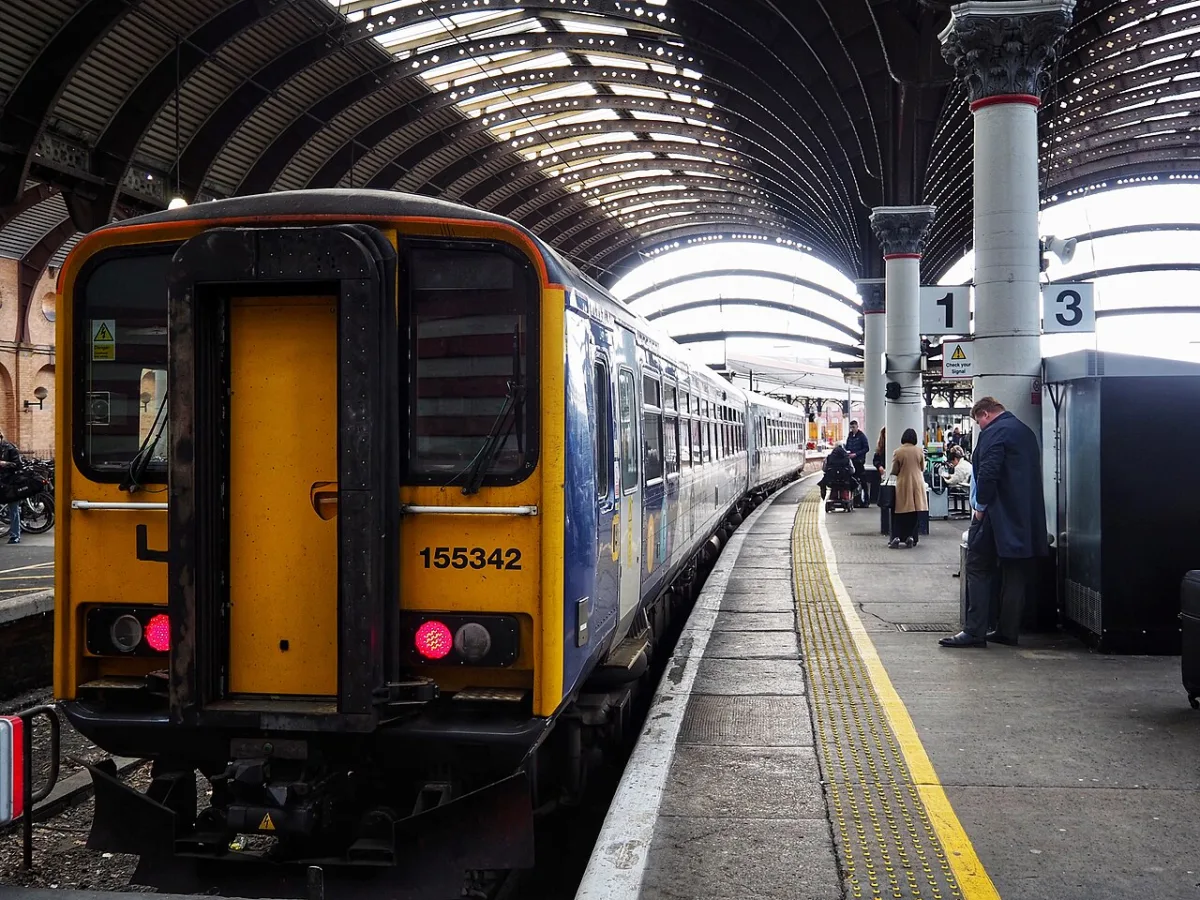

Fastest trains reach Kings Cross in 1h 53m, with 4 or 5 an hour. 2026 walk-up fares, Grand Central's cheaper tickets, and the last train home.
York is one of the best-connected cities in the north, and the London run is the showpiece: a straight shot down the East Coast Main Line to Kings Cross, 173 miles in under two hours on the fastest trains (Trainline). This page sets out the real journey times, how often trains run, the first and last services, and what tickets actually cost in 2026, with a link to every source so you can check it on the day you travel.
The quick version
Two operators run direct from York to London Kings Cross: LNER, which provides most of the service, and open-access operator Grand Central, whose walk-up tickets are cheaper (Trainline). On a typical weekday there are four to five direct trains an hour through the middle of the day: in one sampled hour, departures left York at 10:08, 10:17, 10:27, 10:31 and 10:56 (National Rail timetable via traintimes.org.uk).
| The essentials | |
|---|---|
| Fastest observed journey | 1h 53m |
| Typical journey | about 2h |
| Direct trains, weekday | 4 to 5 an hour |
| First direct train (weekday) | 04:40, arriving 07:00 |
| Last direct train back | 23:08 from Kings Cross |
How long it takes
The fastest service in the current timetable does York to Kings Cross in 1 hour 53 minutes (the 11:17 departure, arriving 13:10). Most trains take around 2 hours, and the stopping services stretch to about 2 hours 14 minutes (traintimes.org.uk). Grand Central’s trains are comparable: a sampled 14:11 departure arrived at 16:08, 1 hour 57 minutes.
What it means for you: for a morning meeting in London, the difference between a fast train and a stopper is over 20 minutes, and they leave from the same platforms. Check the arrival time, not just the departure.
First train down, last train home
On a weekday, the first direct train leaves York at 04:40 and arrives at Kings Cross at 07:00, with the next at 05:57 arriving 08:01 (traintimes.org.uk). So a 9am start in London is comfortable; a 8am start means the 04:40.
Coming home, the last direct train leaves Kings Cross at 23:08 and gets into York at 01:50, taking a slow 2h 42m. The last arrival at a civilised hour is the 22:03, into York at 00:14 (traintimes.org.uk). A 23:33 departure exists but involves a change at Leeds and a 04:54 arrival, which is a night bus with extra steps: avoid it.
What tickets cost in 2026
The walk-up fares on this route, standard class, as shown against live journeys on the National Rail timetable (traintimes.org.uk):
- Anytime Single: £172.50. The turn-up-and-go peak fare, £303.10 in first class.
- Super Off-Peak Single: £75.00 on the trains that carry it.
- Grand Central only: Off-Peak Single £70.70, Off-Peak Return £130.40, Anytime Single £118.40, Anytime Return £196.70. The open-access operator undercuts the flexible LNER fares, at the cost of being locked to its departures.
- Advance Singles are how most seats are actually sold: LNER prices nearly every departure with one, and on the days we sampled they ranged from £48.90 to £106 depending on the train.
What it means for you: book ahead and commit to a specific train and this is a £50 to £60 journey each way; walk up at peak time and it is £172.50. The gap is the whole game on the East Coast Main Line. If you need flexibility on a budget, check whether a Grand Central departure fits your plans before paying the any-operator fare.
One piece of good news that holds through 2026: regulated fares in England are frozen until March 2027, the first freeze in 30 years, covering standard-class season tickets, Anytime and Off-Peak tickets (National Rail). Advance fares are unregulated and can still move.
Commuting: the season ticket reality
York to London is a real commute for some, but the numbers deserve a clear look. A monthly season ticket to London Terminals is £1,817.50, and an annual is £18,932, valid on any permitted route; add Underground zones 1 to 6 and the annual is £19,744 (Trainline season tickets).
What it means for you: at two or three office days a week, well-timed Advance singles at £50 to £60 each way usually beat a season ticket. The season only starts to pay at four or five days a week, every week, and even then it is a £19,000-a-year decision. Price your actual pattern before committing.
York station itself
York station is managed by LNER and is one of the easier big stations to use: it is step-free to all platforms (category A), staffed daily, with a ticket office open 06:00 to 20:00 Monday to Saturday and 08:00 to 18:00 on Sundays, Passenger Assist meeting points, Wi-Fi and cycle hire (National Rail). One current caveat: National Rail is warning that the lifts at the south end of the station are out of order, so check the station page before travelling if you need them. For driving to the station and the works around it, see our York roadworks and travel page.
Frequently asked questions
How long is the train from York to London?
The fastest current service takes 1 hour 53 minutes; most direct trains take around 2 hours, and stopping services up to about 2 hours 14 minutes (traintimes.org.uk).
How many trains a day run from York to London?
Through the weekday daytime there are typically four to five direct trains an hour, run by LNER with additional Grand Central services (traintimes.org.uk, Trainline).
What time is the last train from London to York?
The 23:08 from Kings Cross is the last direct train, arriving York at 01:50. The 22:03, arriving 00:14, is the last one home before midnight (traintimes.org.uk).
How much is a train ticket from York to London?
Booked ahead, LNER Advance singles were on sale from £48.90 on the days we checked. Walk-up, a Super Off-Peak Single is £75, Grand Central’s Off-Peak Single is £70.70, and the fully flexible Anytime Single is £172.50 (traintimes.org.uk).
Is Grand Central cheaper than LNER?
For walk-up tickets, yes: Grand Central’s own Anytime Single is £118.40 against the any-operator £172.50, and its Off-Peak Return is £130.40. The trade-off is that its tickets are valid only on its own, less frequent, departures.
Which London station do York trains arrive at?
London Kings Cross, next door to St Pancras International for Eurostar and on six Underground lines. All direct York services use the East Coast Main Line into Kings Cross.
Sources
- National Rail timetable and walk-up fares via traintimes.org.uk (journey times, frequency, first and last trains, fares)
- Trainline: York to London Kings Cross (operators, distance)
- Trainline: York to London season tickets (monthly and annual season prices)
- National Rail: York station (accessibility, ticket office, lift notice)
- National Rail: the fares freeze (regulated fares frozen until March 2027)
Times and fares were checked against the National Rail timetable in August 2026. Engineering work, especially at weekends, changes the picture: check live times before you travel.
Have your say