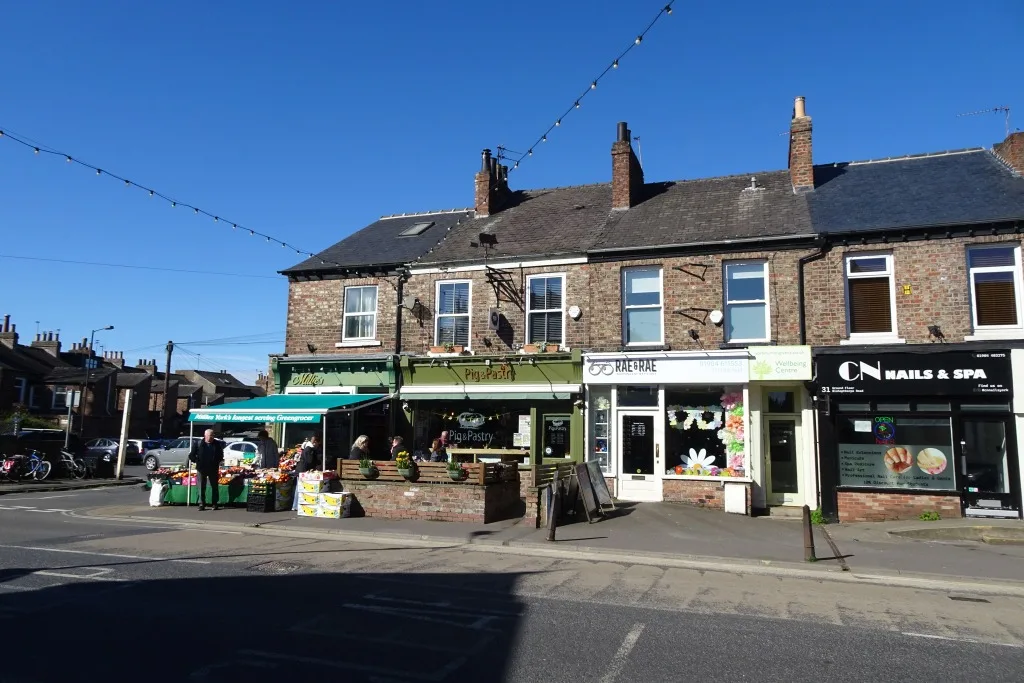

Approved 9 September: the Minster Badge falls from £45 for two years to £15 a year, taking community parking to £1.50 an hour in 17 named places. No refunds.
Parking gets cheaper in Bishopthorpe Road, Micklegate, Heworth and The Groves, but only for York residents who buy a Minster Badge. The council’s Executive approved both changes on Wednesday 9 September. No start date has been set, and the detail of what was agreed is in the update at the foot of this article.
The two changes:
- The Minster Badge falls from £45 for two years to £15 a year. The badge is digital and tied to one vehicle.
- The discount in community parking areas rises from 30% to 50%. That takes the hourly rate for badge holders from £2.10 to £1.50, against a standard £3 an hour.
The discount in city centre car parks does not change (Review of CYC community car park and on-street parking charges in response to petitions, City of York Council Executive, 9 September 2026, paras 26 and 66).
Where the £1.50 rate would apply
The reduced rate would cover three community car parks and a list of on-street locations.
Car parks:
- Bishopthorpe Road
- Rowntree Park
- East Parade, Heworth
On-street, the report names Lawrence Street, Micklegate, Priory Street, Clifton, Garden Street, Huntington Road, Lowther Street, Marygate, Park Grove, Penley’s Grove Street, The Crescent, The Mount, Townend Street and Union Terrace Street (para 66).
The list is written as “including” those streets, so it may not be the final word. Nothing changes on the day of the meeting either. The report says the changes cannot be made immediately because signs, the council website, parking management software and the pay by phone supplier all have to be updated first, and charge changes have to be publicised in advance (para 69).
Where this came from
Traders and residents in four areas petitioned the council after parking charges went up in 2025: Bishopthorpe Road, East Parade in Heworth, Micklegate and The Groves. The petitions were submitted under the right to challenge parking policies in the Traffic Management Act 2004, which obliged the council to review (para 2).
The council commissioned an independent review from Arup. Businesses told it they had fewer customers spending less, and linked that to the higher charges. Residents and visitors said they were using car parks less often, parking somewhere else, changing where they travelled to, and parking for shorter periods (paras 9 and 10).
The council’s own report then adds a caveat about that evidence. It says the national and international picture has dented consumer confidence and cut high street spending everywhere, which has nothing to do with local transport policy (para 10).
The report is candid about the limits of its own evidence
Paragraph 36 is unusually frank for a committee paper. It lists three limitations in the review data:
- it covers only the four petitioned areas
- it does not explore the effect on people who already travel by bus, bike or on foot
- the surveys used simple questionnaires, respondents were mostly self-selected, there was no sampling design, questionnaire testing was limited and no statistical analysis was done
The conclusion follows directly: the review “should not be considered as a city-wide car parking review” and is instead “a limited exercise to present the feedback received from businesses and mainly car-borne visitors for the four areas” (para 37).
The Place Scrutiny Committee, which saw the findings in June 2026, added its own warning. It told the Executive to consider all the review’s recommendations while noting they take no account of the council’s actual powers, its relationship with the York and North Yorkshire Combined Authority, its capacity to deliver, or whether the recommendations are workable (para 39).
What it costs, and what it works against
The council puts the price of the change at roughly £22,000 in lost badge income, based on current holders, plus about £7,000 a year from the bigger community discount. Both figures come with the caveat that more people may buy badges and park more, offsetting the loss (para 22).
The report also states plainly that the discount cuts against the council’s own transport targets. It expects more car use and more mileage to these locations, while arguing the citywide effect will be limited because the discount applies in few places and only to York residents with a badge (para 68).
Those targets come from the Local Transport Strategy adopted in July 2024: a 20% cut in miles driven by 2030, a 50% increase in public transport use, and a doubling of active travel (para 13).
Blue Badge holders keep free unlimited parking (para 26).
Three other things the Executive is asked to agree
Beyond the charges, three process changes are recommended (para 26):
- A parking strategy for York, developed as part of the wider Movement and Place Plan and a kerbside strategy. It would cover parking near places of worship. Cost is estimated at £80,000 to £150,000 depending on scope, funded from transport budgets and the Combined Authority (para 23).
- An informal consultation stage before the council decides on significant parking charge increases, defined as rises above the standard uplift applied to council fees and charges.
- A revised annual parking account report, setting out in more detail what parking revenue is and how it is reinvested.
What it means for you
Do not rush to buy a badge, and do not expect a refund. If you already hold a £45 two-year badge it stays valid, and no refunds will be given to anyone who wants to switch to the £15 annual badge. You can apply for the annual badge when your current one expires (para 69).
The badge is per vehicle. It is digital and registered to a registration number, so a second car needs a second badge.
If you do not buy a badge, nothing gets cheaper. The standard community rate stays at £3 an hour, and the Minster Badge is only available to York residents.
You can speak at the meeting. The Executive meets at 4.30pm on Wednesday 9 September at West Offices, Station Rise. Registration to speak closes at 5pm on Monday 7 September through the council’s meetings page, and the meeting is webcast.
Decisions can be called in until 4pm on Wednesday 16 September (agenda front sheet). Called-in items go to the Corporate Scrutiny Committee.
The Groves may not get everything it asked for. Its petition complained about charge increases and about the traffic regulation orders themselves. The review looked only at charges. Any further look at restrictions there, including the resident parking scheme, would come through the council’s annual review of parking restrictions or the new parking strategy (para 34).
Our parking in York page has the current tariffs for every council car park, the on-street charges, and the free periods, all checked against the council’s own schedule.
Update, 13 September 2026: approved, with no date yet
The Executive approved the recommendations in full on Wednesday 9 September 2026. Its printed decision record confirms both changes to the Minster Badge: the badge drops from £45 for two years to £15 a year, and the discount for badge holders parking in community areas rises from 30% to 50%, which takes the £3 an hour rate down to £1.50 (City of York Council, printed decisions, Executive, 9 September 2026).
Where the 50% discount will apply. The report names the community car parks as Bishopthorpe Road, Rowntree Park and East Parade, and the on-street community areas as Lawrence Street, Micklegate, Priory Street, Clifton, Garden Street, Huntington Road, Lowther Street, Marygate, Park Grove, Penley’s Grove Street, The Crescent, The Mount, Townend Street and Union Terrace Street (para 66b). The discount in city centre car parks does not change and stays at 30% (para 67).
Nothing changes yet. The report is explicit that the changes will not be implemented immediately, because charges have to be publicised in advance and the council’s parking software, Pay by Phone supplier, signs and website all have to be updated (para 69). No start date has been published.
No refunds. If you hold a two-year badge bought at £45, it stays valid and you can buy a one-year badge at £15 when it expires. The council will not refund anyone who wants to swap early (paras 66a and 69).
What it costs the council. About £22,000 a year in lost badge income, which officers expect to be broadly offset by more badges being sold, plus an estimated £7,000 a year from the bigger community discount (para 22).
What was not agreed. The independent review had raised the possibility of a free parking period or a cheaper first hour, and three speakers at the Place Scrutiny Committee asked for a low cost first hour to support Bishopthorpe Road (paras 57 and 61). The Executive instead noted its “continued focus” on Local Transport Strategy objectives, on the officer view that cutting charges generally would work against them (paras 64 and 65).
Two process changes were also approved: an informal consultation stage before any decision on significant increases to council parking charges, defined as increases above the standard fees and charges uplift, and a revised annual parking account report setting out where parking income goes.
Have your say