
Approved on 9 September: three boxes become two wheeled bins for 63,000 York homes, each stream collected every four weeks. Full Council still has to fund it.
Up to 63,000 York households would swap three recycling boxes for two wheeled bins under a plan the council’s Executive decides on next Wednesday.
The change most people will notice is not the containers. It is the timetable. Recycling is collected every two weeks today, with both streams going out together. Under the proposal each stream would be collected once every four weeks instead.
The four-week cycle set out in the report runs like this:
- Week 1 household waste
- Week 2 paper and card
- Week 3 household waste
- Week 4 tins, plastics and glass
Household waste and garden waste collections stay fortnightly and do not change (Recycling Review, City of York Council Executive, 9 September 2026, paras 7 and 8).
Two 180 litre bins, and 30 litres more room
Each household in scope would get two 180 litre bins with hinged lids. One takes paper and card. The other takes tins, plastics and glass.
The council cannot go down to a single bin. Government guidance requires paper and card to be kept apart from other materials, and York’s disposal arrangements make mixing then separating them expensive. The twin stream York already runs earns the council £800,000 a year in recycling income (paras 11 and 31).
On capacity, the report is precise and modest. Two 180 litre bins across a four-week cycle give 30 litres more room than the average household’s three 55 litre boxes over the same period. A 240 litre bin would give 150 litres more, and residents will be able to ask for one after the standard rollout. Smaller 140 litre bins would be available on request in exceptional circumstances (paras 42, 43 and 18).
Boxes are free today with no limit on how many you have. Replacement wheeled bins would be chargeable if lost or damaged, unless the council is at fault (para 12).
Not every terraced street qualifies
Officers assessed 1,017 terraced streets covering 19,491 properties, and graded each one. The results are in Annex G:
- 14,384 properties are suitable for standard conversion with collections from the front
- 1,351 are viable with small constraints
- 597 have medium constraints and may need smaller bins or a central collection point
- 974 are not suitable and would stay on boxes
A further 2,044 properties are collected by St Nicks under contract, mostly in the city centre, and are not eligible for bins because of storage (Annex G; St Nicks figure of around 2,568 properties at para 32 of the main report).
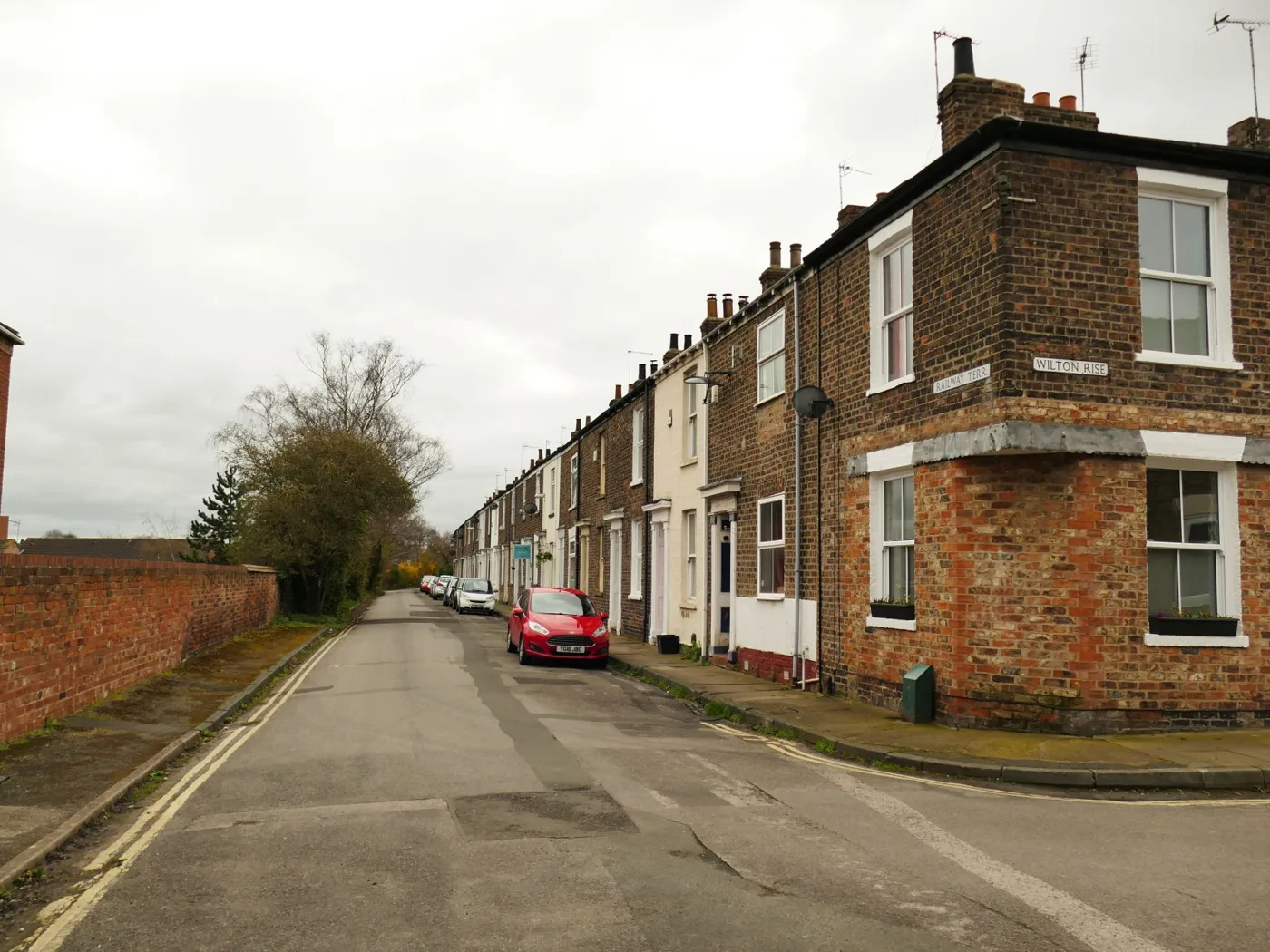
The picture varies sharply by ward. In Westfield, 2,185 of 2,519 terraced properties are suitable for standard conversion. In Holgate, only 767 of 2,535 are, with 408 more viable only with small constraints. Guildhall has 1,102 terraced properties and 316 suitable for standard conversion. Micklegate has the worst ratio of the lot: 121 of 530 suitable, and 202 not suitable at all.
Around 16,000 terraced properties would move to bins in the first phase. Roughly 10,000 more, including streets already covered by the 2025 and 2026 Bags to Bins work, get further analysis in a second phase, with options for the rest explored by 2030 (paras 40, 41 and 44).
£2.8m of borrowing, and Full Council has the final word
The Executive cannot sign this off on its own. It is asked to recommend that Full Council approve up to £2.8m of general fund borrowing for the bins. The revenue cost of that borrowing is about £280,000 a year (paras 16 and 18).
Officers argue the scheme pays for itself. Fewer loaders would be needed per round, and sickness and agency cover should fall, which the report says makes the recommendation cost neutral to revenue budgets (para 67). Boxes currently cost around £70,000 a year to supply and break easily (para 35).
The injury argument is the strongest number in the report. Emptying boxes means crouching, bending, lifting and carrying. Waste services recorded 1,281 musculoskeletal absence days in 2024 and 1,386 in 2025 (paras 36 and 37).
There is also a fleet saving in prospect. Collecting one stream at a time would let the council buy single cell vehicles, cutting the cost of replacement vehicles by around £480,000 at current prices (para 48).
Full Council next meets on Thursday 17 September. Its agenda has not been published yet.
What the 13,000 consultation responses actually said
The council ran a six-week consultation from 23 March to 1 May 2026 and got more than 13,000 responses.
The headline figure is worth reading carefully. Residents were asked whether changing to wheeled bin collection would make it easier for them to recycle. Of 12,880 who answered, 63.66% said yes, 23.89% said no and 12.45% were not sure (Annex C, Table 8). That is a question about ease, not a vote on the proposal.
On barriers, 55.09% saw none. Storage space was named by 38.72% and visual impact on the street by 16.65% (Annex C, Table 10).
Asked what is wrong with boxes now, 65.66% picked litter on the street after collection, 47.89% picked not enough capacity, 39.16% said boxes break easily and 35.35% said they are heavy to carry. Only 19.31% said they were happy with the current system (Annex C, Table 7).
One limitation is stated in the report itself. More than 80% of responses came from semi-detached and detached homes, which are the properties least affected by the storage problem (para 51). Officers ran extra drop-in sessions in densely populated terraced areas in the week beginning 3 August to fill that gap (para 62).
The consultation also raised fire risk. The council asked North Yorkshire Fire and Rescue, which replied that it is “not aware of any issues with wheelie bins”, and that the known problem is hot ashes being put in them, in isolated incidents (para 64).
What it means for you
Nothing changes yet, and no start date has been set. The report contains no implementation timetable. It asks for approval in principle and for the borrowing, with the rollout to follow.
Check whether your street is in the first phase. Annex G lists the assessment by ward, and grades every terraced street from suitable for standard conversion down to not suitable. If yours is graded red, you keep your boxes for now.
You can speak at the meeting. The Executive meets at 4.30pm on Wednesday 9 September at West Offices, Station Rise. The deadline to register to speak is 5pm on Monday 7 September, through the council’s meetings page. The meeting is webcast.
A decision can be challenged after it is made. Any councillor wanting to call in a decision from this meeting has until 4pm on Wednesday 16 September (agenda front sheet). Called-in items go to the Corporate Scrutiny Committee.
If you get a bin, look after it. Boxes are replaced free and there is no cap on how many you have. Replacement wheeled bins would be chargeable unless the loss or damage is the council’s fault.
Our York bin collection days page has the current containers, what goes in each one, and the garden waste and bulky waste charges.
The wider push behind it
York is not moving alone. North Yorkshire Council, which shares disposal arrangements with York, is harmonising its collection rounds the same way (para 47).
The driver is the government’s Simpler Recycling reforms, which continue to expand over the next few years (Defra policy update). York added tetra packaging and toothpaste tubes to kerbside collections in November 2025, and plant pots in March 2026 (paras 23 and 24).
Soft plastic film is the next item due, and it has slipped. Defra has moved kerbside soft film collections to April 2030 because there is not yet an adequate processing market, though councils are expected to prepare and collect earlier if they can (para 26).
Waste management accounts for 21,000 tonnes of carbon dioxide equivalent in York, about 3% of the city’s total emissions (para 72).
Update, 13 September 2026: approved
The Executive approved the switch at its meeting on Wednesday 9 September 2026. Its printed decision record says it:
- approved moving from recycling boxes to 180-litre recycling bins as standard, with the first phase covering up to 63,000 properties
- recommended that Full Council approve the borrowing needed to fund capital investment of up to £2.8m in recycling bins, so the money is not yet signed off
- delegated authority to officers to find solutions with third parties for properties with storage problems, which may mean a small proportion of homes in the first phase stay on boxes
- agreed that Waste Services will consider requests for larger 240-litre containers after the standard rollout, with 140-litre bins only in exceptional circumstances and where a resident can reasonably justify the request
(City of York Council, printed decisions, Executive, 9 September 2026).
Any councillor wishing to call the decision in has until 4pm on the fifth working day after the meeting, which falls on Wednesday 16 September.
Have your say