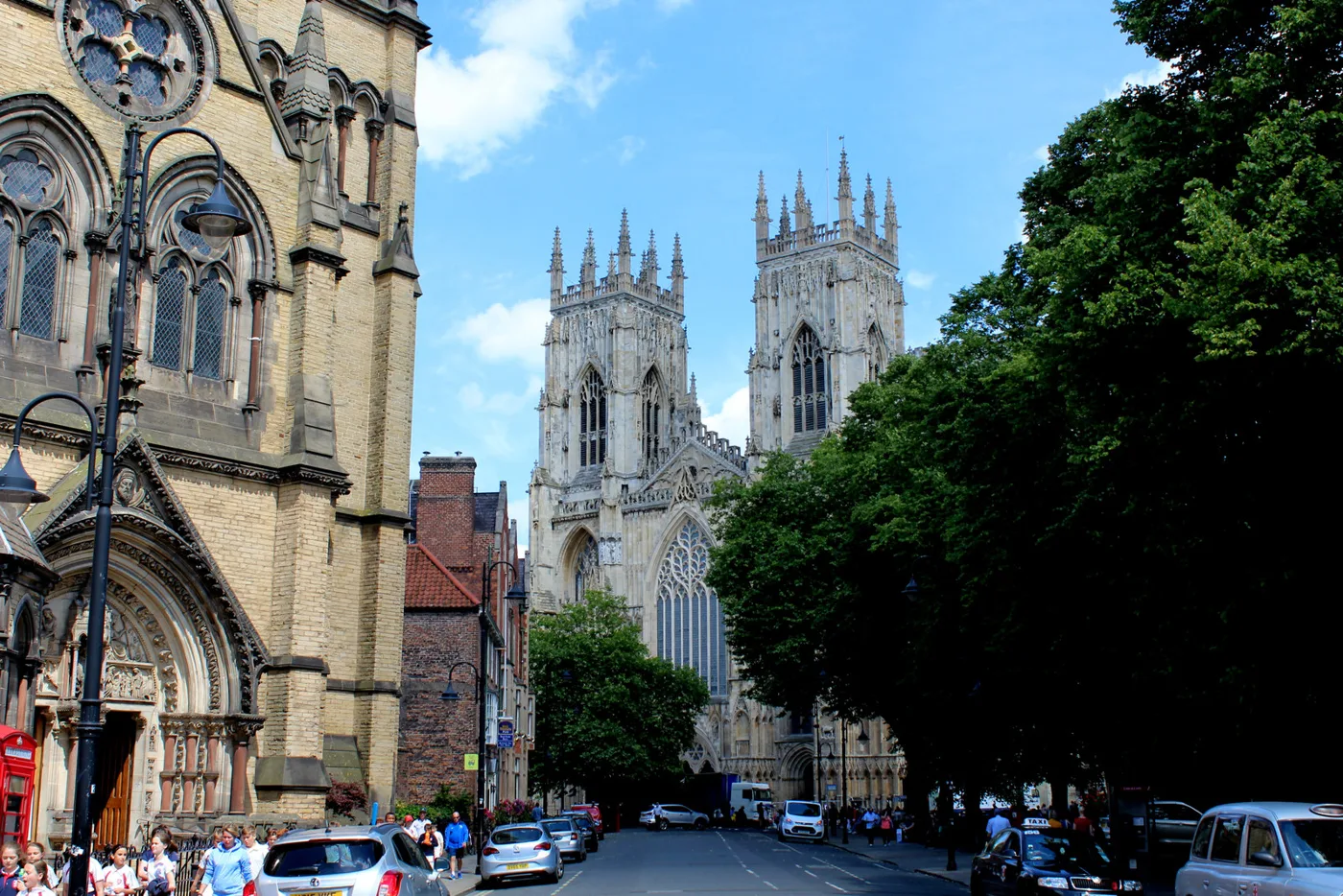

Approved 9 September: eight streets by the Minster come under a permanent order, and the chief executive can switch it on when police ask, without notice.
York’s Executive is asked on Wednesday to make a permanent anti-terrorism traffic order covering the city centre. If it does, a North Yorkshire Police superintendent will be able to shut those streets to vehicles and to people on foot, and the council will not have to take a fresh decision each time.
The order would sit dormant. It only bites when the police ask for it to be switched on.
The meeting is at 4.30pm on Wednesday 9 September at West Offices (agenda and papers).
Which streets are covered
The proposed area is the existing pedestrianised core, which already has permanent hostile vehicle mitigation barriers, plus eight streets that do not (officer report, paragraph 37):
- College Street
- Deangate
- Duncombe Place
- High Petergate
- Minster Gates
- Minster Yard
- Precentors Court
- The Queen’s Path
Those eight run around the Minster. The council added them because temporary orders have repeatedly been needed there already, including temporary barriers on Duncombe Place on New Year’s Eve.
The order only applies to the public highway. One respondent asked why the Minster itself and the Minster gardens were left out; officers answer that both are private land, so a traffic order cannot reach them. The affected ward is Guildhall, though the report notes the effect on access to the city centre falls on every ward.
Who can switch it on
This is the part that changes. Under the draft order (Annex C):
- A North Yorkshire Police officer of the rank of superintendent or above commences, suspends or revives the restrictions.
- On the council’s side, the Executive is asked to delegate activation to the Chief Executive, rather than bring it back to councillors.
- Only police, fire and ambulance vehicles and personnel on official duty are written into the order as exempt. There is no Blue Badge exemption in the order itself.
- Restrictions must cover the minimum roads, minimum types of road user and minimum period necessary.
- Access cannot be restricted for more than 48 hours continuously without the Chief Constable and the Chief Executive both agreeing.
On notice, the order aims for seven days where that is possible. It does not guarantee it. The report is direct about this: there will potentially be times when the order is activated without notice because of urgency, for example after a terrorist incident. In that case the police must immediately tell the council’s CCTV control room and alert other emergency responders.
Note what the order restricts. Article 2 stops any person entering or proceeding in the area, not only vehicles.
How it got here
The formal request came from Tim Forber, Chief Constable of North Yorkshire Police, in a letter to the council dated 9 December 2024 (Annex D). It is four sentences long and cites sections 22C and 22D of the Road Traffic Regulation Act 1984. A council can only make one of these orders when the police ask, and only to reduce danger or damage connected with terrorism. It cannot be used for anything else.
The statutory consultation was advertised on 18 March 2026 and ran for eight weeks. Letters went to every registered Blue Badge holder and to residents and businesses inside the proposed area, with an Easy Read version and posters in libraries and Explore centres.
The council has not published how many people responded either way. Annexes G and H, which hold the representations for and against, are not on the agenda page, so the numbers cannot be checked from the papers.
What people objected to
Officers group the objections, and the report answers each one:
- Blue Badge access. Some respondents thought restrictions would apply permanently. Officers say they will not, because the order lies dormant, and that any restrictions may cover only part of the area. But they do not promise access. Counter-terrorism advice is to cut vehicle numbers to an absolute minimum where the order is live, because vehicles can be stolen or access gained by deception.
- Whether it works. Respondents argued a vehicle ban does nothing about a device carried in a bag or a pushchair. Officers accept that, and say the measures address vehicle ramming and vehicle-borne devices only.
- The size of the area. Residents and businesses on the eight extra streets said they did not know how their own access would be handled. Officers reply that it depends on the event, which is the same answer they would give under the present system.
- Cap the use. One respondent asked for a limit of 10 to 15 days a year. Officers say that is not possible, because the police can ask at any time.
- Keep it temporary. One objector said temporary orders are quick enough, and that a permanent one would “encourage a police state”.
- Risk level. Some said York is not a terrorism target. The report replies that the national threat level is severe, meaning an attack is highly likely.
One respondent said they would consider a legal challenge if the order is approved. Officers say the grounds were not clear enough to assess.
Representations in support argued safety comes first. One Blue Badge holder told the council that losing access for a limited period was a small price to pay in unpredictable times. Another respondent said the proposal did not go far enough.
The council’s own view of its room to manoeuvre
The report is unusually blunt about how much choice councillors have. It says refusing an order after a Chief Constable has recommended one “would be an unprecedented event nationally”. It tells the Executive to give significant weight to the recommendation, and that councillors “would need extremely compelling alternative factors to outweigh” it, adding that “such factors do not appear to apply here”.
Officers recommend approval. The two alternatives, covering only the barriered area or keeping to temporary orders each time, are both marked not recommended.
The report was signed off on 18 August 2026 by Dave Atkinson, Director of Environmental and Regulatory Services, and Garry Taylor, Director of City Development.
What it means for you
- Nothing changes on Wednesday night. If approved, the order is made and then left dormant. You will not see new barriers appear because of this decision.
- When it is used, it may come with no warning. Seven days’ notice is the aim, not a guarantee. Plan for that if you live or run a business on the eight streets around the Minster.
- Blue Badge holders should not assume access. During the 2025 Christmas Market’s temporary order, vehicles carrying Blue Badge holders were among those kept out during operating hours, alongside non-emergency repair and waste vehicles. The council’s parking page covers the everyday footstreets exemptions, which are separate and unaffected.
- Costs stay with the council. Event organisers can be charged for temporary barriers and signage, decided case by case. Organisers of a protest march or political rally cannot be charged at all, so the council picks up the bill.
- This is not why the city centre shuts on Tuesday. Separate one-off closures apply on 8 September for the royal gun salute; those are in our roadworks and travel page.
The Executive can approve, amend or reject the recommendation. Papers for all thirteen items, including the parking review and the recycling review, are on the council’s democracy site.
Update, 13 September 2026: approved
The Executive approved the order on Wednesday 9 September 2026. Its printed decision record says it considered the representations made during the statutory consultation, approved the making of the permanent order as drafted in Annex C, and delegated the decision to activate it to the council’s Chief Executive, on receipt of a recommendation from the police.
It also approved the development of a decision-making framework for activation, to be worked up by the Chief Executive with the Leader of the Council and the relevant Executive Members. The stated reason is the recommendation from the Chief Constable of North Yorkshire Police (City of York Council, printed decisions, Executive, 9 September 2026).
Have your say