
Five new fineable offences proposed inside York's city walls, from pestering to crowding a cash machine. Survey closes 18 September; what changed since December.
City of York Council is asking residents whether five new behaviours should become fineable offences inside the city walls, and the survey is open until 11.59pm on Friday 18 September. The council opened the consultation on 10 August and describes it as an extension of the existing city centre Public Spaces Protection Order (PSPO), which at present deals only with alcohol.
The five behaviours the council wants to add
The council’s own wording, from the consultation notice, lists these:
- Intimidation and coercion: pressuring or deliberately intimidating someone into giving money.
- Persisting in requests: continuing to ask for money or food, or to pressure someone to do something, after they have already said no.
- Pestering or pursuing: following, nagging or blocking a person’s path.
- Invasion of personal space: hindering free passage, impeding a doorway, or standing uncomfortably close to someone, the example given being directly beside them at a cash machine.
- Disorderly groups: groups collectively shouting, behaving aggressively or disruptively, or drinking in a way likely to make someone nearby fear disorder, abuse or a confrontation.
If adopted, engaging in any of them within the order area “would be an offence punishable by a fine”, according to the consultation page. That page does not state the amount. The current city walls order carries a fixed penalty of £100, cut to £75 if paid within 14 days, with a maximum on conviction of a level 2 fine, and the December decision report that set this process running said renewal “does not change the amount of any Fixed Penalty Notice (FPN) at £100”.
What the order does now
The order in force today is narrow. It was made on 11 December 2025, runs for three years to 11 December 2028, and covers “the area bordered by the City Walls”. It prohibits two things: continuing to drink alcohol when asked to stop, and failing to hand over alcohol when a police officer or authorised person asks for it. Police and council officers can both enforce it.
That order replaced one that had been in place since 2022 and expired in August 2025, according to the Executive decision report of 2 December 2025. The same report explains why the wider powers were not brought in then: the autumn 2025 survey drew just 77 responses and 33 comments, which officers said was “not considered sufficient to justify the expansion of the prohibitions”, and did not give enough evidence for a proper equalities and human rights assessment of the effect on vulnerable people. The Executive renewed the alcohol ban so it was in place for Christmas, and ordered “a further detailed consultation” on wider powers in 2026, “ahead of the busy summer holiday period”. That is the consultation now running, a little later than planned.
What has changed since December
The wording has moved. In December the Executive approved consultation on four specific powers, set out in paragraph 13 of the report: the ability to remove groups of two or more people causing anti-social behaviour; a ban on begging, defined as any verbal, non-verbal or written request for money, donations or goods “including the placing of hats, clothing or containers” where it causes or is likely to cause harassment, alarm, distress, nuisance or annoyance; a “no return within 24 hours” rule for anyone asked to leave the city centre by an authorised officer; and a ban on loitering, sitting or lying in or next to doorways or around pay machines.
None of those four labels appears in the survey now open. The word “begging” does not appear in the council’s August notice at all. Instead the five proposed conditions are framed around conduct towards another person: intimidation, persistence after a refusal, pursuit, invasion of space and disorderly groups. Sitting or lying in a doorway is not, on its own, in the new list; a 24-hour exclusion is not in it; and the “groups of two or more” threshold has become “disorderly groups” with no number attached.
The December report is candid about who the wider powers were aimed at. It describes “an emerging trend in individuals from other towns and cities in the region travelling to York specifically to beg and often dealing drugs on the streets”, driven by neighbouring places bringing in their own PSPOs, and says the powers “would not be used in relation to individuals from York or with a connection to York who find themselves on the streets”. It also records that residents and stakeholders raised concern “around unequal treatment for homeless and rough sleeping people in particular”, which is why the fuller consultation was required. Whether that intent survives into the final order, and how an officer would apply it on the street, is exactly the sort of thing the survey is there to test.
The evidence the council is working from
The December report gives the incident figure behind all this: during the first seven months of 2025 there were 573 incidents within the city walls relating to violence, anti-social behaviour and concern for safety, a number the council itself calls “relatively low compared to other cities”. Of the 77 people who answered the autumn 2025 survey, 81% said they had experienced anti-social behaviour in the city centre in the previous 12 months.
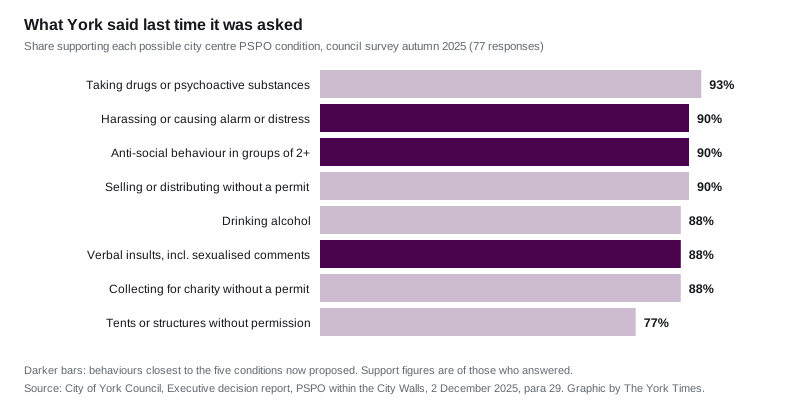
That earlier survey also tested a longer menu of possible conditions than the five now proposed. Support ran from 93% for a ban on taking drugs or other psychoactive substances down to 77% for a ban on putting up tents or other structures without council permission. Restrictions on drinking, on harassment, on verbal insults including sexualised comments, on group anti-social behaviour and on unlicensed selling all polled between 88% and 90%. Several of those, notably drugs, tents and unlicensed trading, are not in the August list either.
What it means for you
- You have until 11.59pm on Friday 18 September to respond. The survey is at surveymonkey.com/r/CYC-CityCentrePSPO, linked from the council’s current consultations page.
- Paper and easy-read copies are available from Explore libraries and West Offices, or by calling the customer centre on 01904 551550. Other formats via cycaccessteam@york.gov.uk. Questions to saferyork@york.gov.uk.
- Nothing changes yet. The only PSPO conditions in force inside the walls are the alcohol ones. A decision on any extension will come after the survey closes; the December report says the Executive Member would sign any new order under delegated authority, so watch the council’s decision sessions from October.
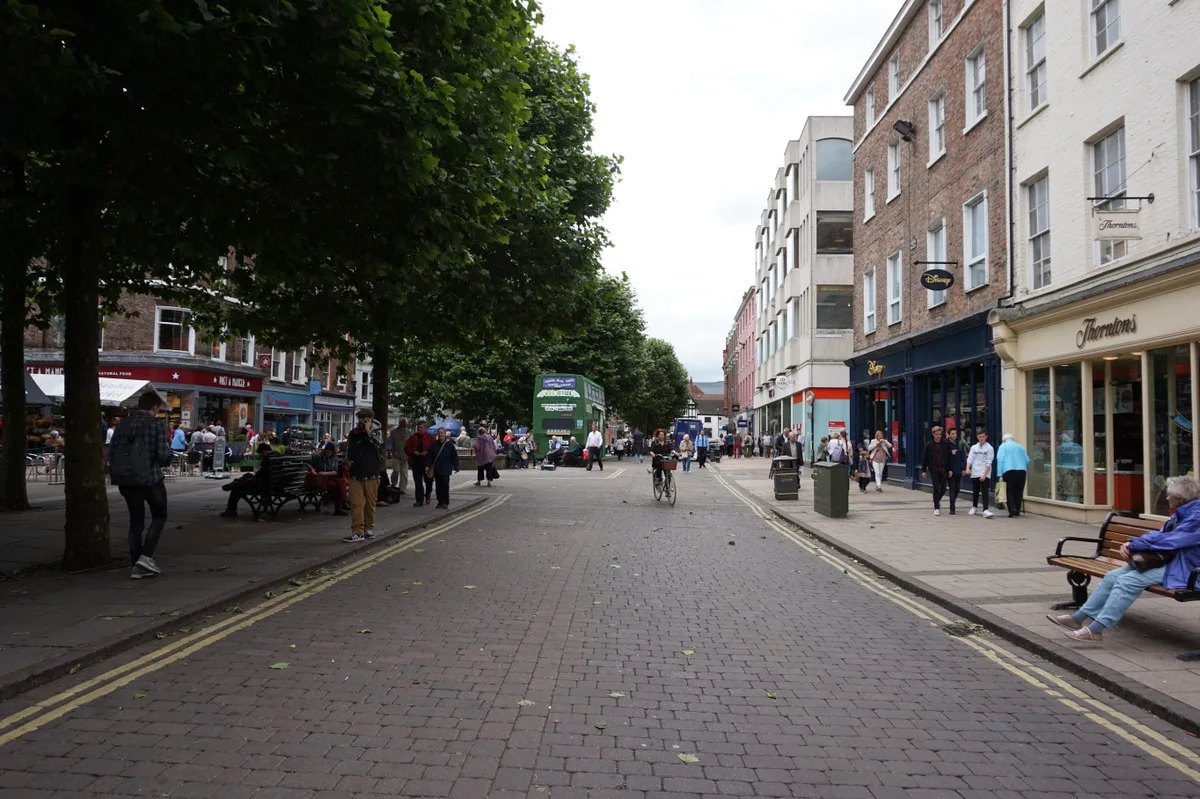
- The area is “the area bordered by the City Walls”, which takes in Parliament Street, Coney Street, the Shambles and Micklegate but not the station or the streets beyond the bars. The council’s map is on its PSPO page.
- If you run a city centre business, the doorway and cash machine wording is the part most likely to touch your frontage. Say so in the survey if the definitions are too vague or too broad to be workable.
- If you are homeless or work with people who are, the December report says the extra powers were never meant to be used against people from York who are on the streets, but that assurance is in a report, not in the draft wording. The consultation is where to press for it to be written in.
The council quotes Councillor Anna Perrett as saying: “Your feedback will help us understand local experiences and whether additional PSPO conditions would be appropriate.”
The York Times covers city centre parking on our parking in York page and council decisions on our York planning news page.
Have your say